Walmart
Modernizing the world’s biggest retailer with AI
2023
I worked directly with the C-Suite on vision and MVP initiatives to bring AI into every part of how Walmart runs omnichannel retail, from identifying product trends to automating inventory and pricing.
01 — The problem
Fortune #1, run on sheets.
Walmart takes in $1.5B+ a day in the US alone, across 58 departments and a catalog of 4M+ products. Yet it ran on dated software, spreadsheets and emails prone to errors and inefficiency. Meanwhile ecommerce grew 24% a quarter, but operated as a siloed business without the technical means to run as a truly omnichannel organization.
02 — The scope
A broad, complex
problem.
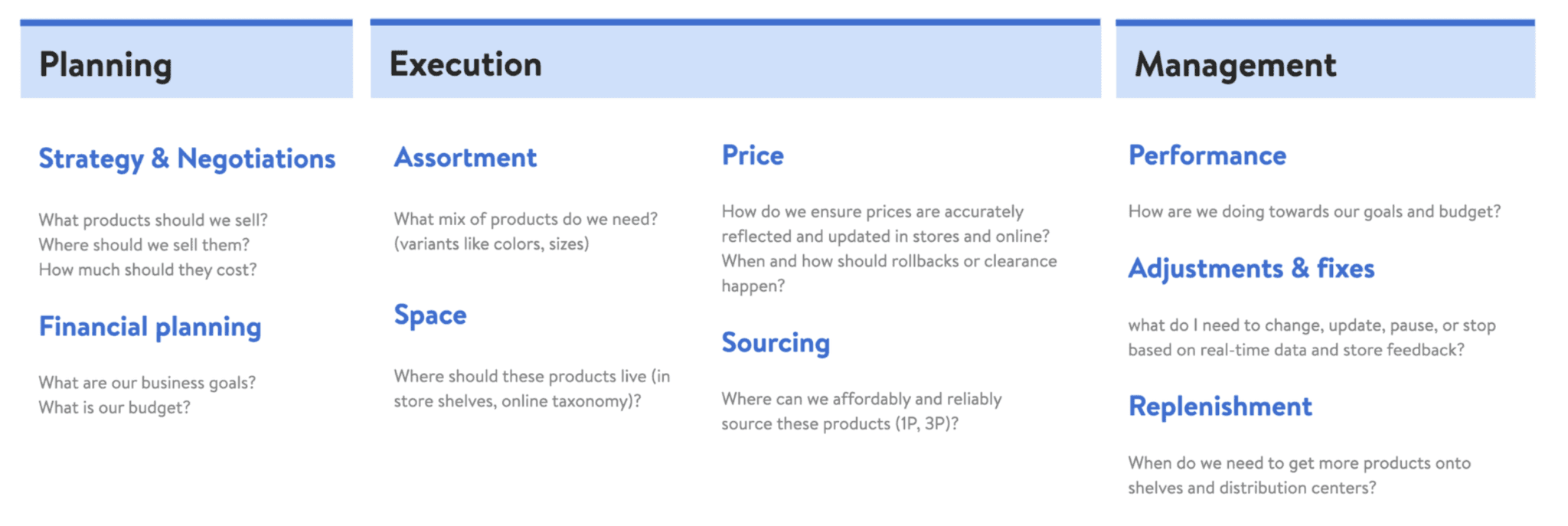
My team was responsible for software covering the planning, execution and management of merchandising across every department, in stores and online. I also covered Walmart’s global CMS for walmart.com and the consumer app. My 12 designers worked with 50+ PMs, and I was the glue that connected divergent goals into a cohesive effort.

03 — My role as a leader
0→1 transformation.
I worked with the C-suite to define the vision and execution for numerous 0→1 products that changed how the world’s biggest retailer selects, acquires, distributes and merchandises products across 4,800 stores, walmart.com and the Walmart app. Leading a senior manager, 12 product designers and a researcher, I learned the complexities of the business and empowered the team to use AI in its early days, from trend forecasting to keeping shelves stocked at everyday low prices.
04 — An operating system for retail
Raw data →
business
opportunities.
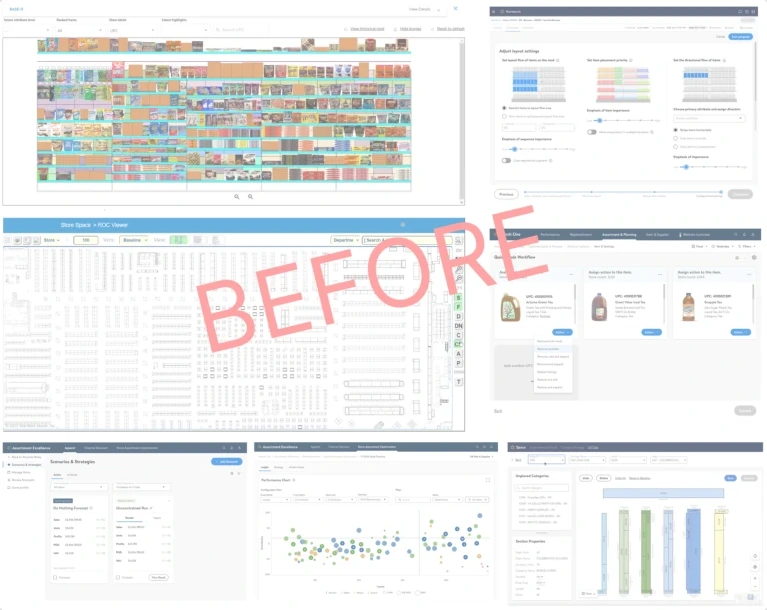
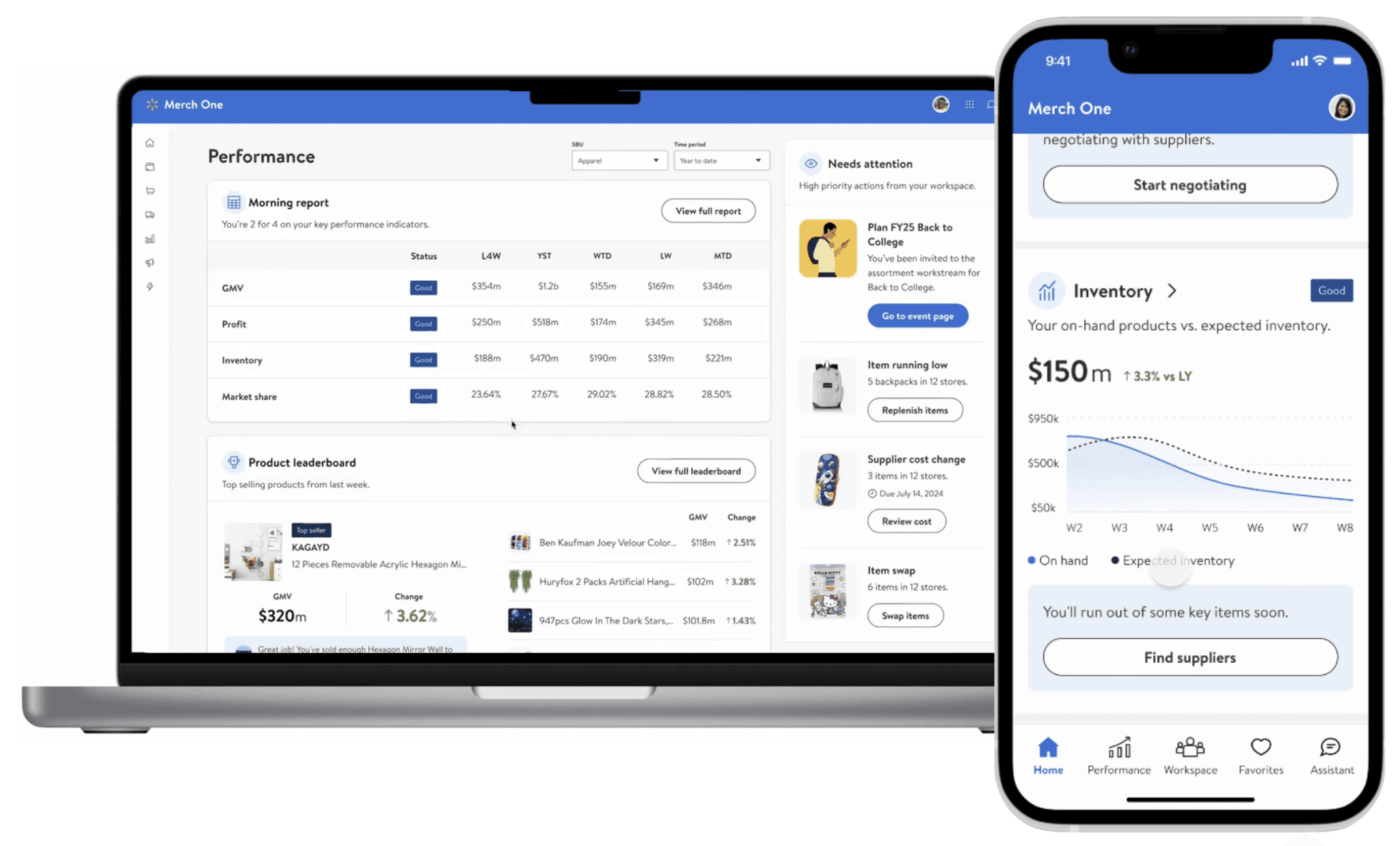
We held listening sessions with merchants, operators and leaders across every department to create Walmart’s first OS for running the business: product assortment, distribution, business analytics and more. Rather than just showing raw data, the software surfaced opportunities and issues for employees to address before they became a problem, on desktop and mobile.
05 — A bias towards insights and actions
Next best action.
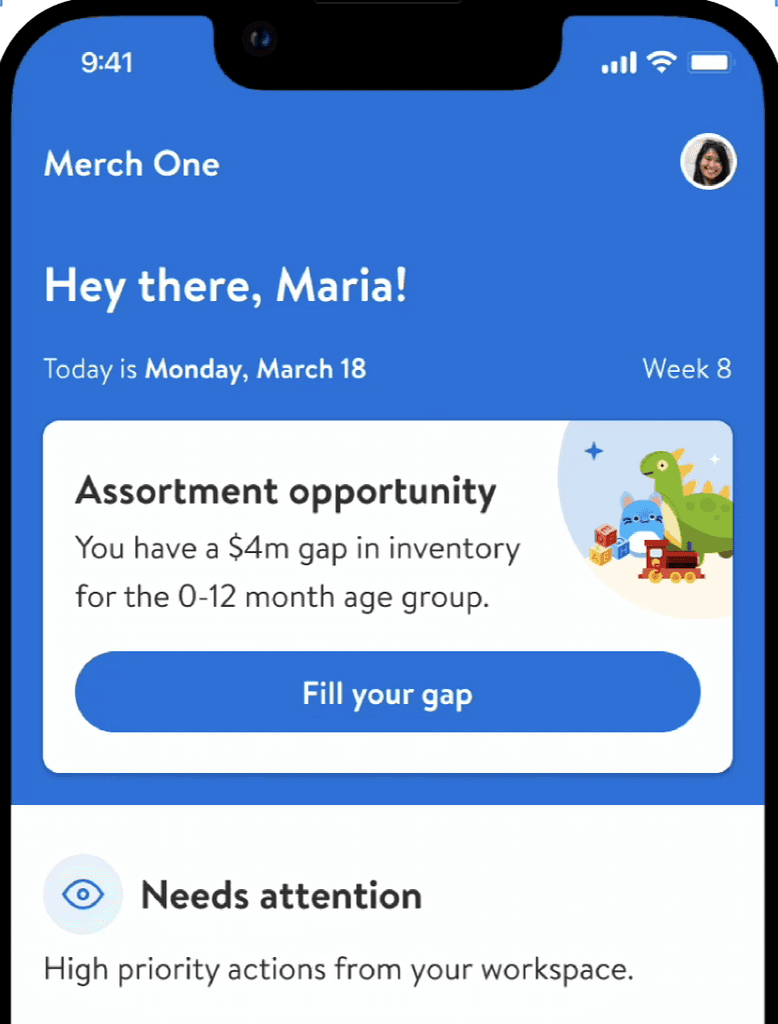
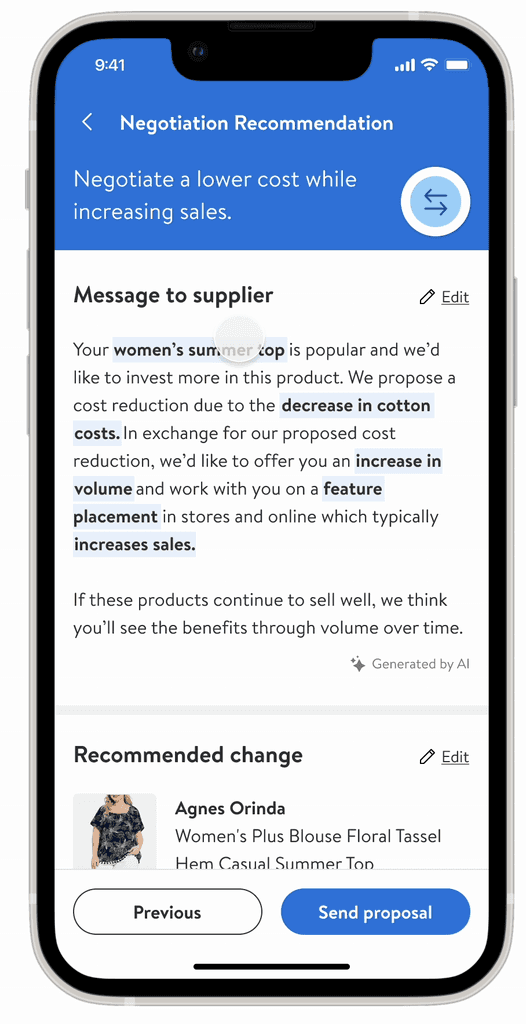
I set design principles that biased our software toward Next Best Actions for high-value opportunities. The result was heavily AI-assisted workflows that made important, high-value work so fast and easy it could be done on a phone.
06 — A proactive AI assistant
AI that comes to you.
I advocated for an AI that brings urgent situations to the user. Here, the assistant pushes a notification to a replenishment supplier that inventory is critically low because of an inclement weather forecast, and offers to move stock from nearby stores to head off the issue.
07 — Omnichannel merchandising
One interface,
in store & online.
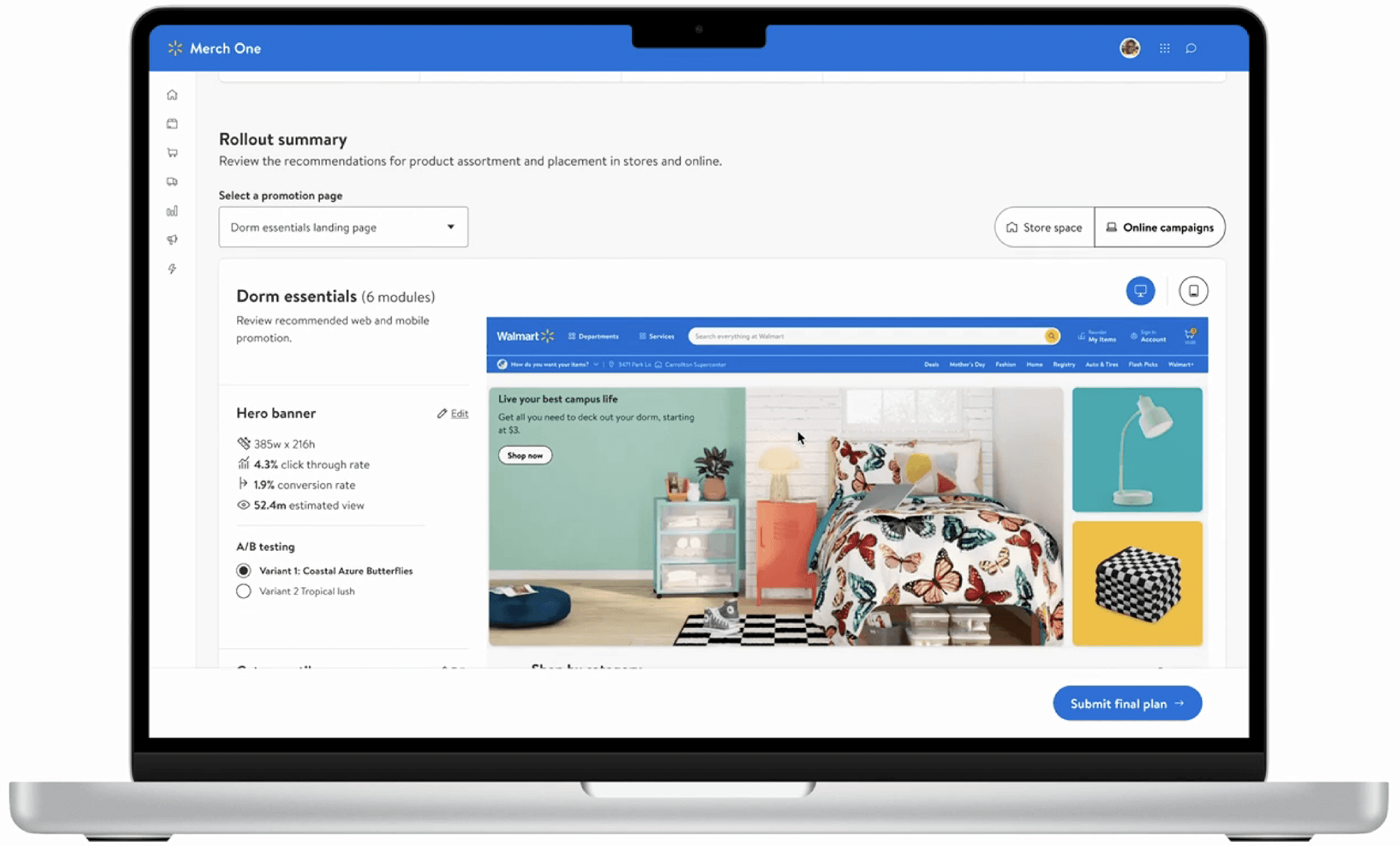
We created end-to-end experiences that, for the first time, let the company promote products in store and online through the same interface, with a unified strategy for seasonal events like Back to School.
08 — AI-guided intelligence
AI-powered trends for happier customers.
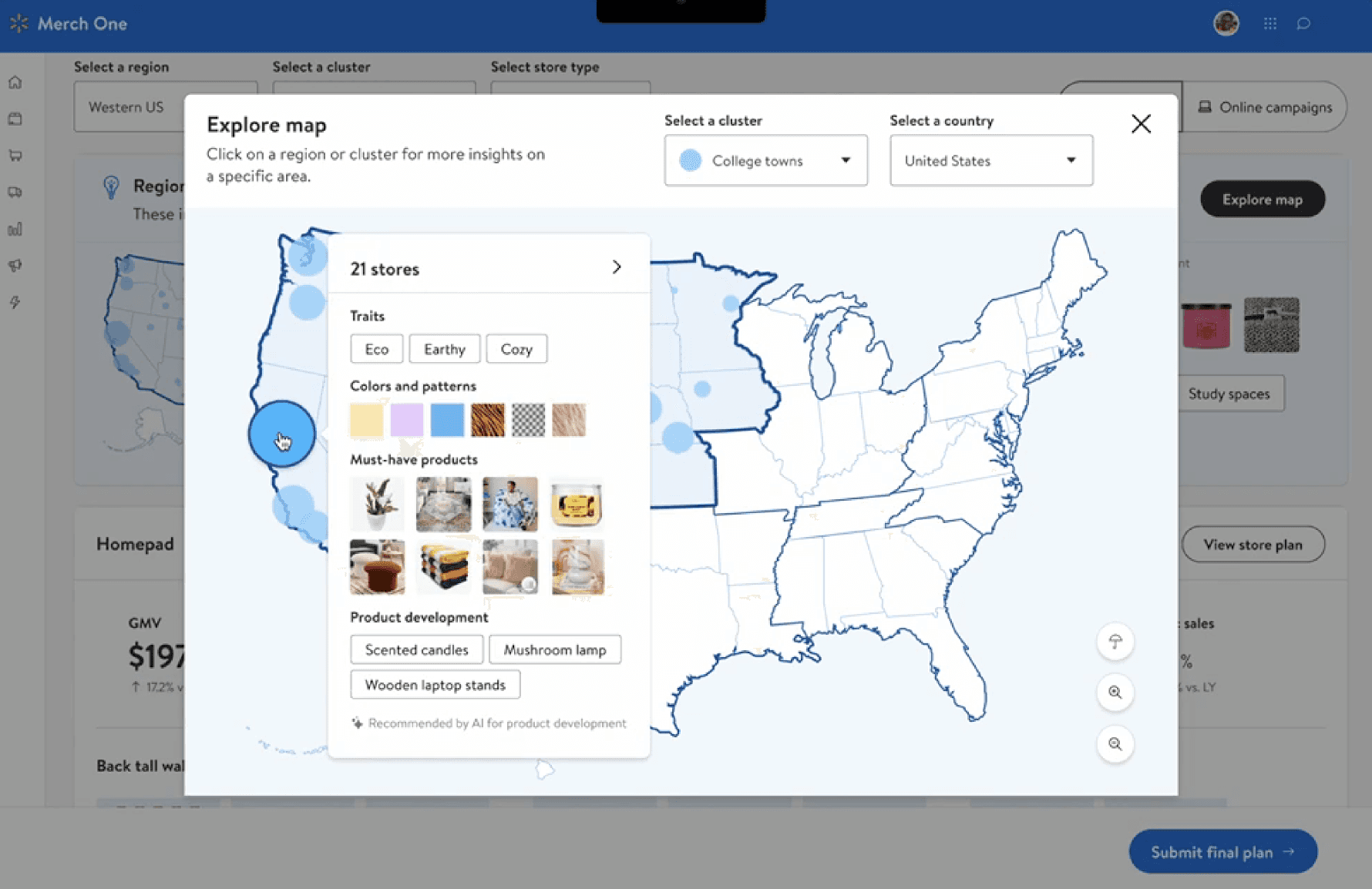
We studied how teams decided which products to buy and sell, and found ways to operationalize AI for more nuanced, localized insight, like product and style preferences at a regional level. AI would “show its homework” to build trust in its thinking, while giving the user the ability to override and modify plans.
09 — Supercharging collaborative workflows
A visual
approach
to layouts.
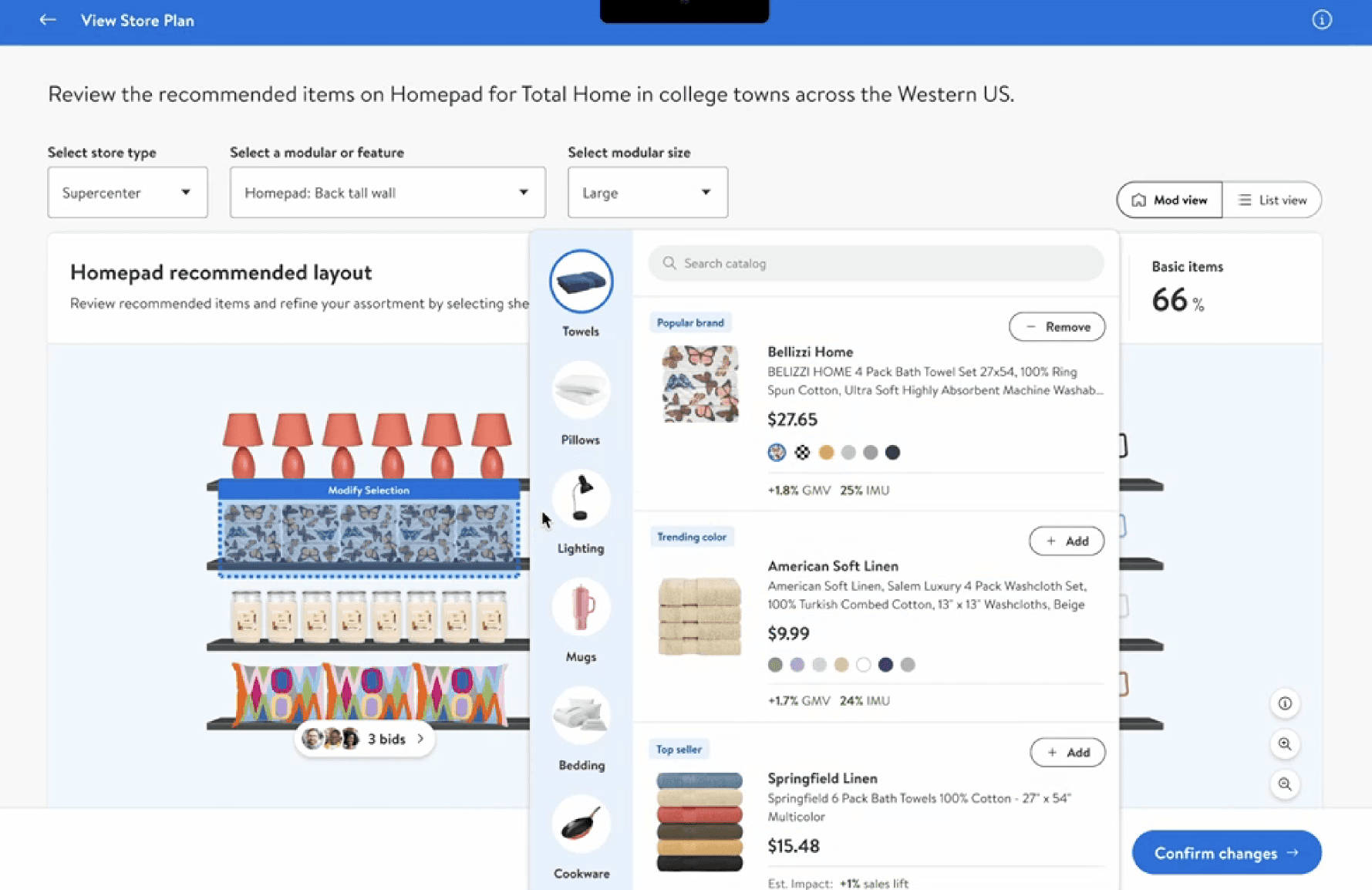
The software looked at past data to propose approaches, with a visual editor that considered past purchase patterns and how they relate to online vs. in-store sales.
10 — The outcome
Several firsts,
powerhouse team.
I led the team through Walmart’s first enterprise software covering the full end-to-end work of merchandising at Walmart. Its first AI enterprise software, which acts on behalf of the user in use cases from automating pricing to inventory, became a go-to from junior merchandisers up to the C-suite.
I built a world-class team to do it, delivering what our Chief Design Officer called “some of the best work to come out of this team” and setting a new bar for consumer-grade enterprise software that saved time and money. Walmart cracks AI at scale ↗︎